

In this series I am drawing out reflections from a recent journey to Kenya. This week’s contribution comes from Chofong Alfred, missions pastor at Menda Baptist Church in Bamenda, Cameroon.
—
Moving around in Africa with a keen look will undeniably bring to one’s sight the impact of Western missionary efforts. History about how different churches were planted—along with structures, trees, and graves—testify about the sacrifices the West made to send their children and resources. Thankfully, their efforts produced fruit in the hearts of those who listened to their message.
At the same time, however, their labor brought another message which has also lingered: many Africans still believe missions is the duty of the Western church and have defined sending mostly in terms of financial strength. Though there is a growing awareness about the place of African churches in global missions, the issue of funding that participation remains a great challenge.
Nevertheless, the story of African sending can still be told differently. I believe African churches can impact the nations greatly if sending is understood not primarily in terms of replicating Western sending or funding, but in terms of stewarding the people, access, and opportunities God has already provided. In this light therefore, African churches should be asking the following:
Whom God is already moving?
Where has he given access?
How can the church take responsibility?
Our People Already Moving
As the world becomes more globalized, it is not surprising that God is already moving many African Christians across different cultures, both within Africa and beyond. This means members of African churches are already:
relocating
traveling
studying
working
trading
These could be faithful servants across cultures, even among unreached peoples.
The Nations Coming Near
Apart from African believers already moving to other cultures, God is also bringing the nations to Africa in many great ways. This will only increase with time. People of other ethnicities, languages, and nationalities are arriving in our cities and neighborhoods as:
students
migrants
refugees
laborers
professionals
How can we welcome them in such a way that the nations will know Christ and grow in him even in our midst?
Access Already Open
With Africans moving among the nations, and the nations moving among Africans, there is already access to people we could not have had if being a missionary was the only pathway. We must consider the unusual access provided by the following vocational routes:
business professionals
institutional leaders
government roles
labor migration
regional relationships
How can we disciple Christians in such a way that they see themselves as sent ones with unique access, equipped to reach out to people of other cultures?
The Responsibility to Steward
Clearly, God is already moving in great ways. Lying at our door steps are great missions opportunities which will require little spending or a sophisticated sending model. Rather, it is a matter of the African church being a good steward.
This means a number of things. First, when Christians step out of the church, they should not simply be looking for a way to sustain themselves financially. They should regard themselves as sent ones on mission for God—uniquely disguised as marketplace workers, teachers, medical doctors, government workers on diplomatic assignment, etc. Church leaders can help them to realize this.
For example, in my congregation we have not only emphasized this idea, but our men’s ministry even put it in a beautiful song. It is titled “What Do You Do?” The first stanzas go like this:
What do you do? (3x)
I am a disciple of the Lord Jesus Christ
On mission for Him cleverly disguised
You are disguised (2x)
You are disguised as who?
I’m cleverly disguised as a medical doctor
My real mission is to make more disciples for Christ
I’m cleverly disguised as an electrician
My real mission is to make more disciples for Christ
I’m cleverly disguised as a classroom teacher
My real mission is to make more disciples for Christ
Whether Christians are moving or staying at home, they will still have access to lost people, perhaps even from unreached groups. If the church disciples, equips, and intentionally sends these Christians each week, they can be faithful witnesses where they have access—and seek access where it does not yet exist. For example, a Christian teacher could ask for a transfer to work among certain unreached peoples, or a farmer could buy a farm among the unreached, employ them, and stay there to preach the gospel to them.
Normal Christians stewarding what they already have will open doors for the gospel.
It is important to note, of course, that none of this replaces the church’s responsibility to send well. Whatever pathway an African believer takes, the church must still discern, prepare, commission, shepherd, and remain connected to that person. Stewardship is a long-term commitment.
A Lesson from the West
Western Christians engaged in global missions the way they did because of what they had been given. In other words, they were just stewarding the people, resources, and access God had provided. Through this, many among the nations were able to hear the gospel. Though it is the Lord’s place to fully assess the quality of their effort, we can learn this valuable lesson: when African churches steward our people, access, opportunities, and resources well, the nations will hear the voice of the LORD.
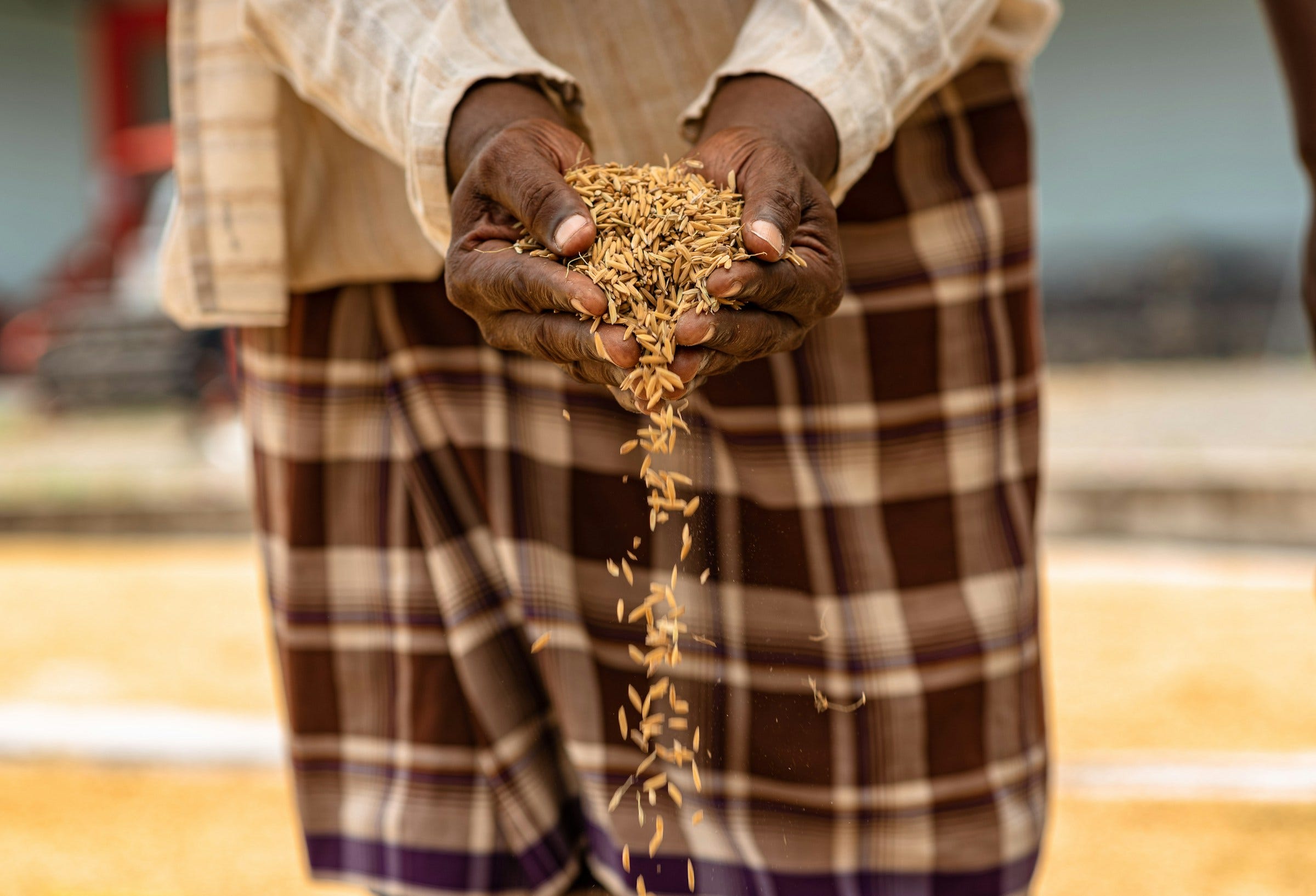
The mission of God is truly enormous—but that does not call us to merely surrender. God does not expect the African church to use what he has not given us, or to be richer like another region before we can send. He wants us to use what he has placed in our hands, whether it is small or great.
This idea solidified in my mind when I had the opportunity to select hymns for the recent sending church trainings by Upstream Collective in Kenya. One of the hymns clearly emphasized that “little is much when God is in it.” Even if what we do is small and unpopular, “it is great if God is in it.” This is not just a song. It is a reminder that what God wants is our trust and faithfulness.
How are we stewarding what the Lord has given us?
