

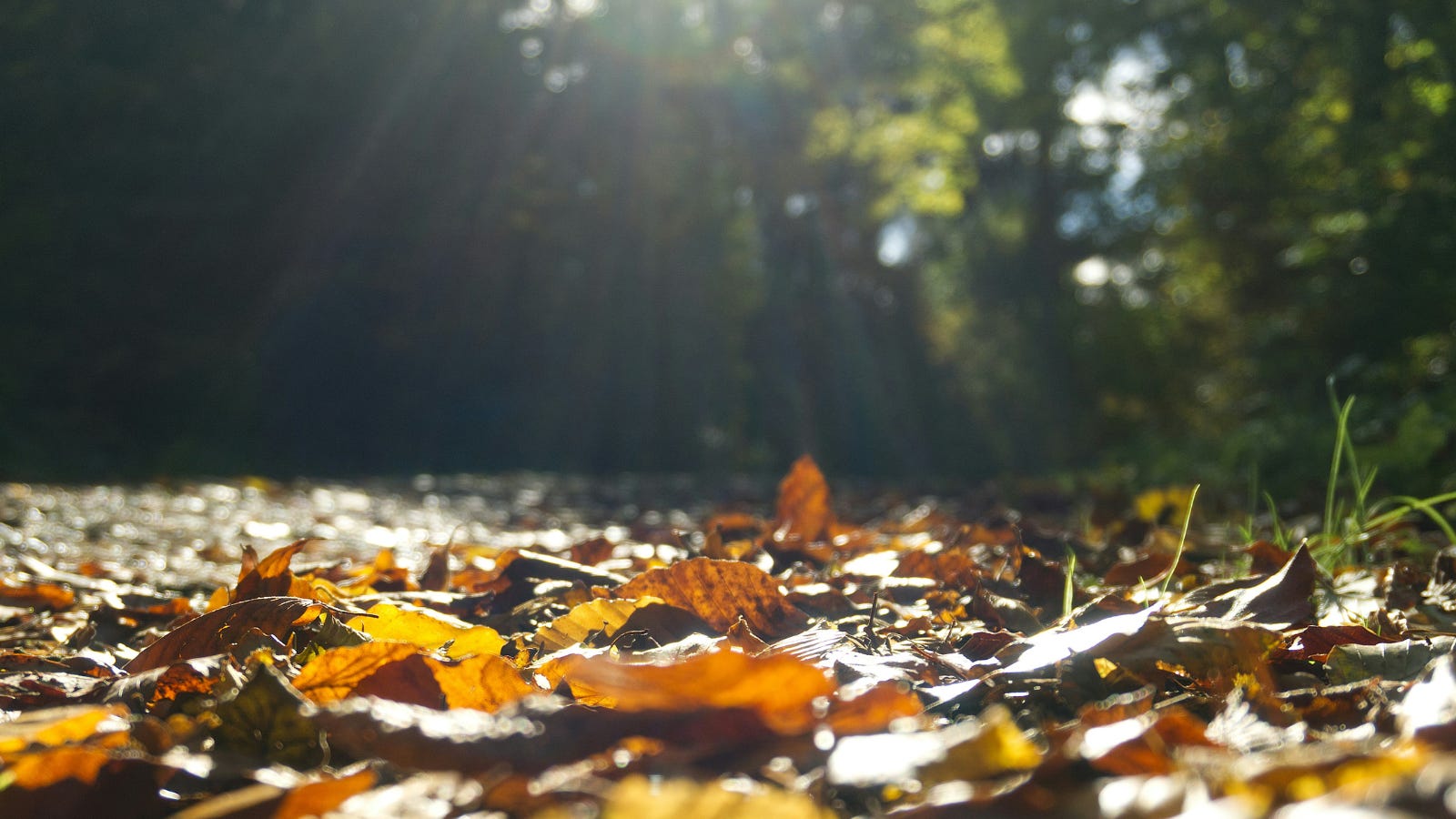
It was the leaves that told me I was 7,370 miles from home. I had been a missionary in East Africa for a year—long enough to mark the end of the honeymoon phase. As a rare breeze rustled something brittle in the compound’s concrete yard, my love for Kentucky’s distinct seasons, especially Fall, immediately stirred deep memory. And I felt hope fade from me like leaves approaching their colorful death.
I was homesick.
That was when I met Wendell Berry. Not in person, of course. Like most of us, I shook his hand in the form of a book. The introduction came by way of an older agricultural missionary who had also recently taught me how to garden. I suppose a patch of land is the best place to meet the late Kentucky author. Even if it is surrounded by concrete.
The book was A Place on Earth, one of Berry’s novels set in the fictional town of Port William. The dialect immediately transported me back to the tobacco farm where I grew up. That alone could’ve shaken my fragile emotions into a bare winter. But I soon realized the story was communicating something deeper than Kentucky lore.
A Theology of Place
Uprooting and moving across the world has a way of severing you from a sense of place. Familiar soil and shared identity help keep your feet on the ground. As a missionary, I had given up both. I boarded the airplane and never really came back down.
What Berry restored to me was what I call “a theology of place.” Not necessarily binding me to a Port William of my own, never to leave. Rather, it unveiled the sacredness of the ground beneath my feet—whatever obscure stretch of earth God had given me to inhabit for a time. I found it quieting my urge to always be somewhere else, offended by the ordinariness of where I already was.
God made this place. There is a story here. I am alive in it. There’s nowhere else I’d rather be.
The Heaven I Had Imagined
Nurturing the rows of carrots and watching my little patch grow, I was comforted. Yet I began to sense a tension between Berry’s love for the earth and what I had learned about Christian faith and missionary vocation. The more I cared about the soil, the more something told me I shouldn’t. My citizenship is in heaven, I said to myself. This is all just going to burn up someday.
I’m on a mission to save souls, not trees.
Yet the more I learned to see the trees, and to love them, the more a tree-less heaven lost its appeal.
Fill it with the redeemed from every nation, tribe, people and language? Yes! Center it on knowing Jesus face to face alongside his bride? Please! But spend eternity floating on clouds, attending endless worship services, and pacing alone in the halls of my mansion? If I was honest, I was beginning to prefer a garden, or Kentucky in Fall.
To my surprise, one of Berry’s characters in A Place on Earth confessed the same thing:
“I ain’t saying I don’t believe there’s a Heaven. I surely hope there is…But I do say it ain’t easy to believe. And even while I hope for it, I’ve got to admit I’d rather go to Port William.”1
I believed in the life to come. But in my homesickness I was beginning to wonder whether the life I pictured there was the one God had actually promised.
Learning to Imagine Redemption
Now fearful of Berry’s influence, I turned to the Scriptures to prove him wrong. They provided a revealing look indeed.
“Our citizenship is in heaven,” Paul writes. But he immediately describes the Savior we await from there, “who will transform our lowly bodies so that they will be like his glorious body” (Philippians 3:20–21). The heavenly citizenship I had invoked actually came with a profoundly physical hope.
Elsewhere, I found Paul extending that hope to creation itself. Alongside our bodies awaiting redemption, the world God made groans to be “liberated from its bondage to decay and brought into the freedom and glory of the children of God” (Romans 8:19–22). I couldn’t help but acknowledge the continuity. Even as the transformed creation exceeds what we have experienced in a fallen world, it does not become an alien world.
I dove deeper. Scripture didn’t deny a fearsome judgement in which “the heavens will be dissolved with fire and the elements will melt with heat.” Yet Peter’s burning description still leads toward the promise of “new heavens and a new earth where righteousness dwells” (2 Peter 3:10–13). The fire I found was also a refining fire.
Then the Bible’s final vision gave my imagination something to really work with. In Revelation 21-22 an earthy redemption emerges, with the promise that “all things” are being made new. A city descends from heaven. God makes his dwelling with his people. A river flows from his throne. The tree of life bears fruit. The nations bring their glory into the city. God’s servants worship him and see his face.
There were leaves in the story after all.
Hope Taking Root
Even in that concrete yard, suddenly the leaves gave my hope a place on earth. The goodness that had drawn me into cross-cultural mission had also led me to a garden. I was sowing gospel words and planting carrots and cucumbers. Both could be acts of homesick faith.
This is what I have come to call redemptive imagination: the intentional practice of letting God’s promises shape our vision of the future, deepen our desire for the world he will make new, and strengthen our hope within the one we inhabit now. Unlike the cloudy eschatology of my childhood, it hinges on continuity between this creation and the new creation, a connection that I believe Scripture validates.
There will be trees.
I could not say how much that world would resemble my little garden, or the Kentucky farm where I grew up. But that wasn’t a reason to avoid imagining it. Don’t become so heavenly minded that you’re no earthly good, warned my conscience. Yet as my imagination reached toward the new creation, my feet actually started coming back down to the ground. This is a place worth loving.
In a short time, my longing had grown beyond simply a return to the place I had left. I could groan for the redemption of the ground where I now stood, and for its people to know the Christ who had come to save them. I could proclaim that hope, even as I sowed in dirt and tears.
The world God’s mission is moving toward was beginning to change how I received the life he had given me. The risen Christ who sends his people also gives them a material future. Remembering that future could help me remain present when the work was slow, the place unfamiliar, and home still 7,370 miles away.
Toward Home
I’m grateful for the surprising influence of a Kentucky author and a farming missionary. In line and furrow, they helped me read Scripture better. In hope, they enlarged my hope.
I still love Kentucky in Fall. I know the home I await is far greater, with room for the redeemed of every nation. Its deepest joy will be God with us. Yet somehow it will never despise a creation bearing witness.
Whether surrounded by colors or concrete, I now find myself lingering over a part of that preternatural witness: a tree. It is said to have leaves that are “for the healing of the nations” (Revelation 22:2).
That is a future I was born to imagine.
And while I wait, there is a place to love beneath my feet.
Wendell Berry, A Place on Earth (Berkeley: Counterpoint, 2001)